Project stages
Stage number, status, estimated start and end, expected duration, and objective form one record. Each stage links back to its agreement.

NPI project management
Process development, document preparation, qualification, and CGMP batches are project stage records. Each stage carries a number, status, estimated start and end, expected duration, and objective, and links back to its agreement and billing items. The same records render as a table, a board, a timeline, and a calendar.
Book a demoScope
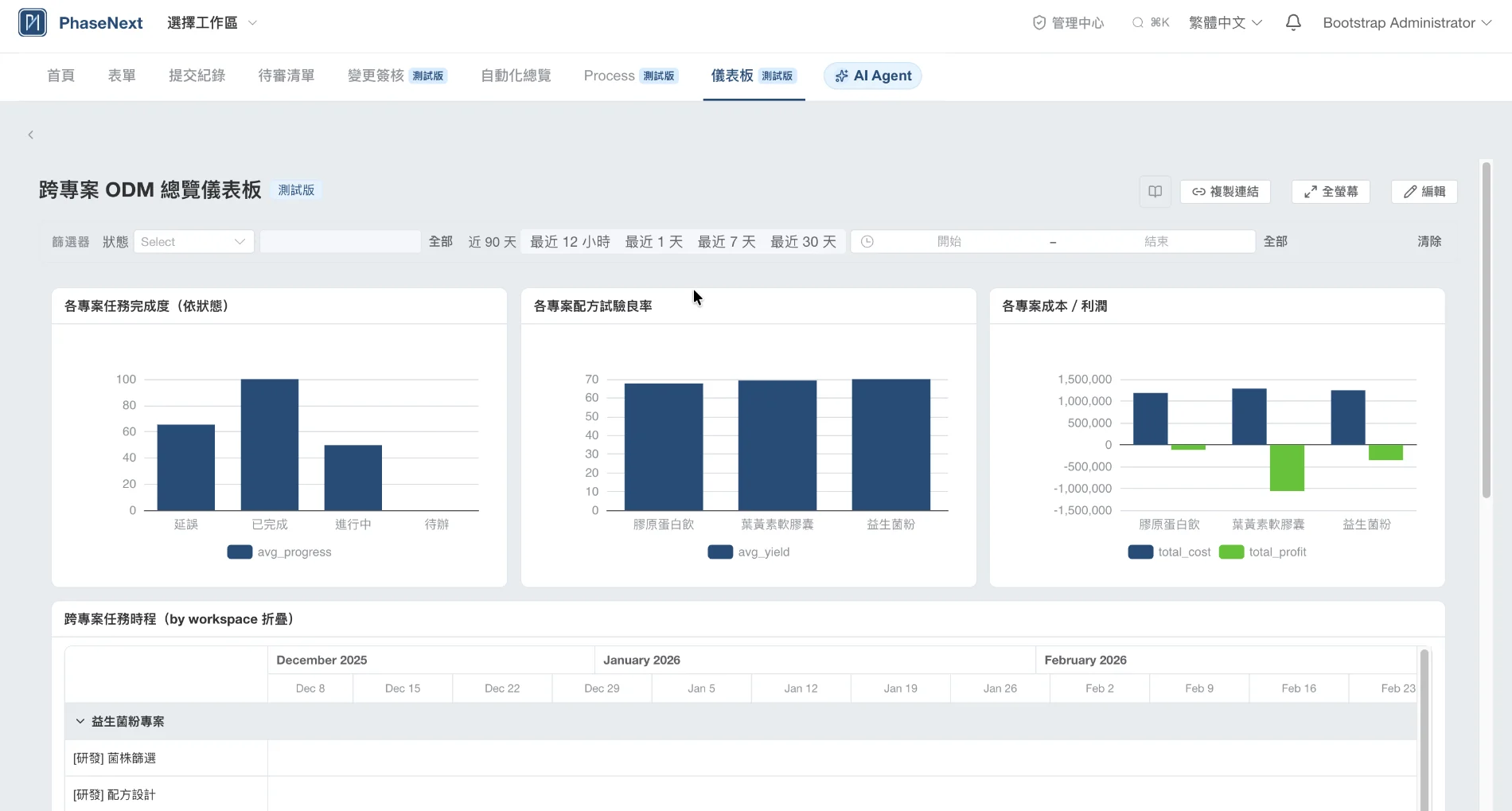
Stage number, status, estimated start and end, expected duration, and objective form one record. Each stage links back to its agreement.
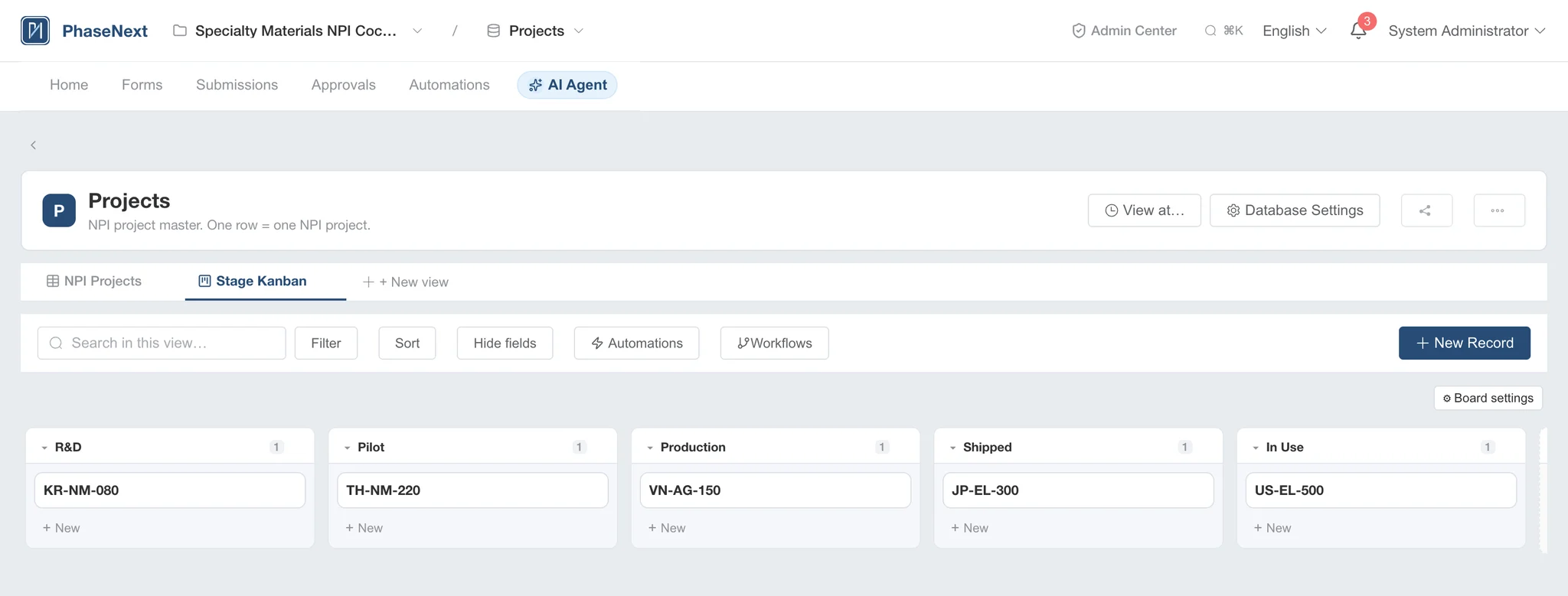
A table, a board grouped by a property, a draggable timeline, and a calendar. Each view is personal or shared with the team.
Work advances through defined process stages. Approval gates route to the responsible manager. Each record shows the days spent at its current stage.
Service fees, material and consumable deposits, and outsourced items attach to their stage. Schedule adjustments and change orders move with cost.
Configuration
Stage fields, statuses, relations, and process gates are set by the project team. Change orders, repeated batches, and added stages are recorded on the same structure.
Visibility
The plan and the status report come from the same records.
Bounded AI
Statements of work, quotations, and stage lists are decomposed into candidate stages, fields, and relations.
Candidates are created after review and adjustment.
Stage records link back to their source document for item-by-item verification.
Where it fits
Multi-stage development and manufacturing work where schedule, deliverables, approvals, and billing have to stay aligned. PhaseNext is developed and supported by a Taiwan-based team.
Configuration demo