Plasmid library setup
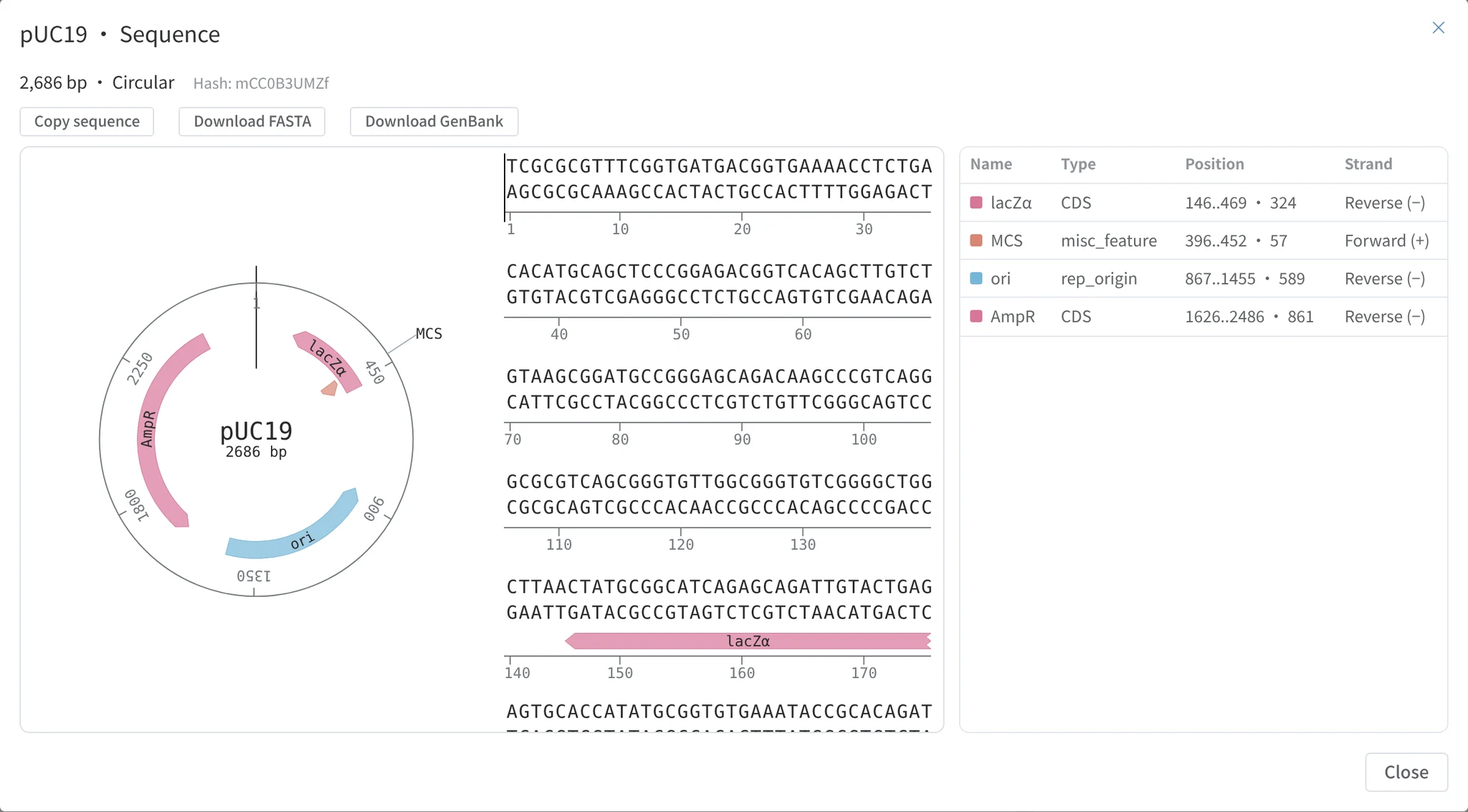
Historical GenBank, FASTA and SnapGene files import as plasmid records with topology and annotations; host, storage location and identifier fields follow current organizational rules.

Plasmid and vector management
For protein drug development and CDMO teams. GenBank and SnapGene files scattered across personal computers become structured records, each sequence tied to an organizational identifier, encoded protein and batches.
Book a demoUse cases
Historical GenBank, FASTA and SnapGene files import as plasmid records with topology and annotations; host, storage location and identifier fields follow current organizational rules.
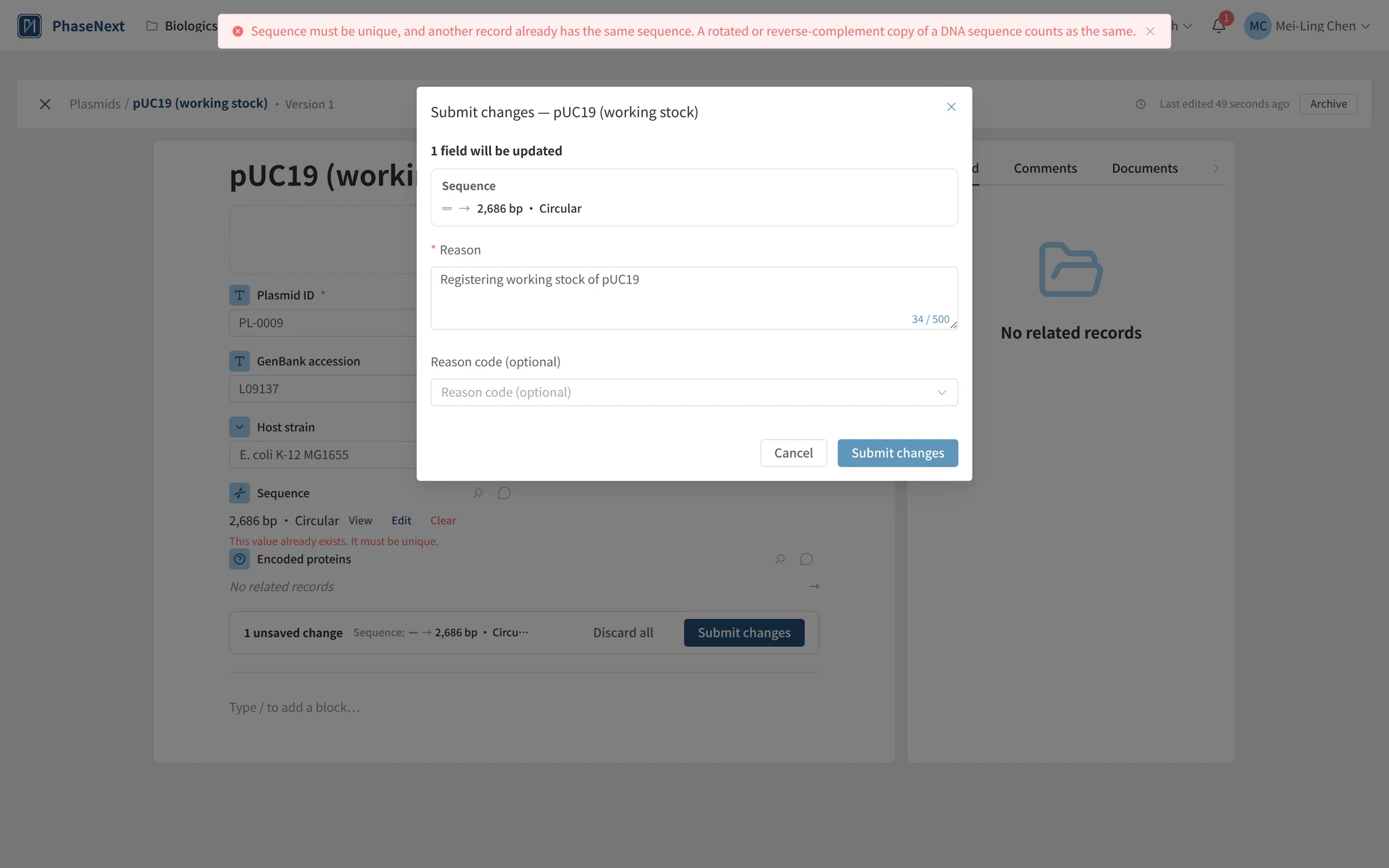
The same plasmid is often saved from different start positions across team members' files. With a unique sequence field, rotated and reverse-complement copies count as the same sequence at entry.
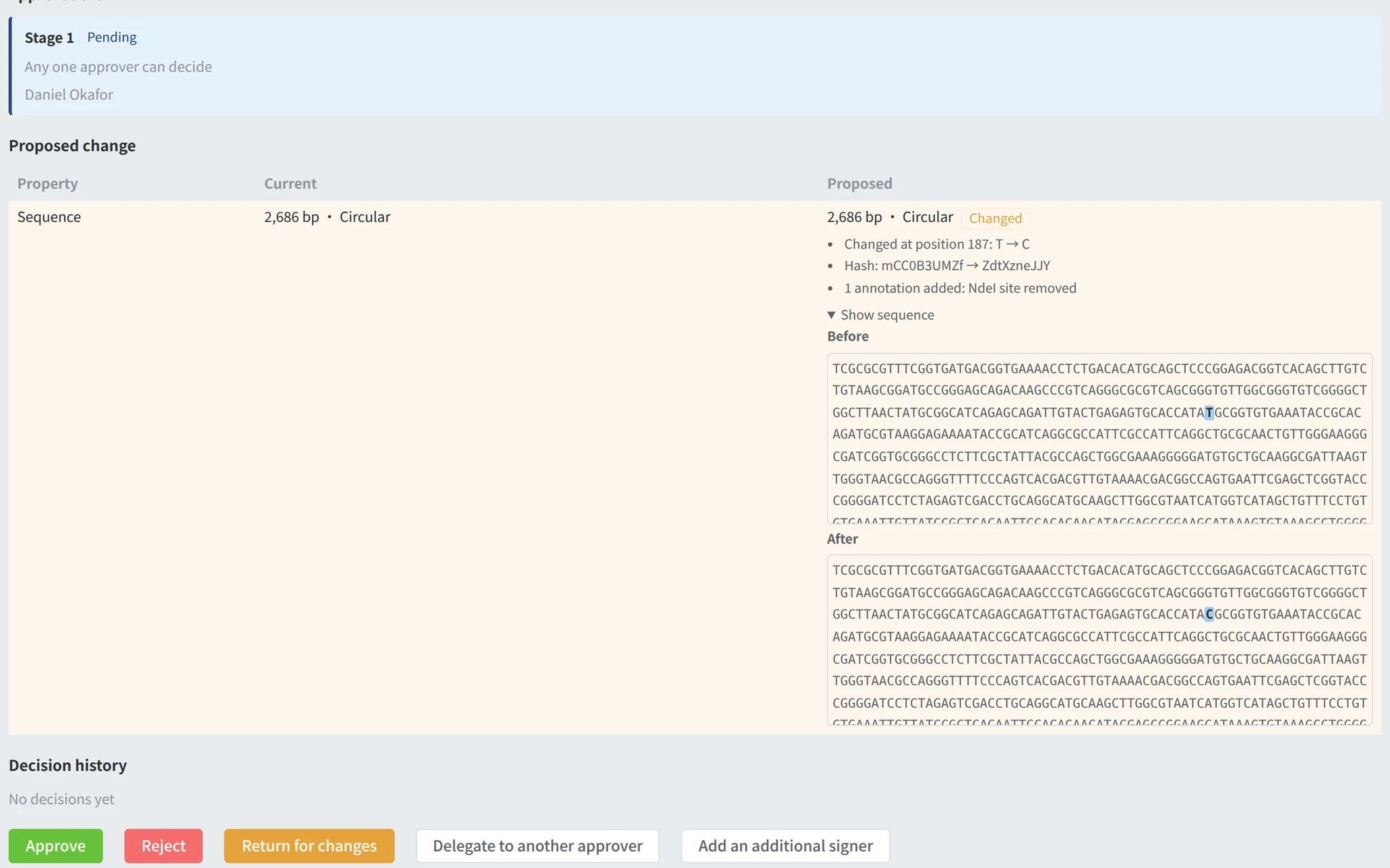
Construct changes go to approval with the changed position, before and after bases and sequence hashes shown; annotation-only edits state that residues are unchanged.
Relations link plasmids to encoded proteins and production batches, so change assessment can review batches that use the same vector.
Screens show demonstration data: sequences from public NCBI and UniProt records, fictional names.
Configuration demo